The walk-in lounge
Guests pay for 30 or 60 minutes, drive and leave. Location matters more than anything else, and the counter is the bottleneck on a busy night.
Most people who open a sim racing center are racers first. They know what a good rig feels like and which sims matter. What catches them out is everything around the rig: the booking that double-sold a Saturday, the birthday party that turned up with eleven kids and four signed waivers, the corporate group that wanted a proper race and got six people driving alone.
“Sim racing” covers at least four different businesses. Rig count, floor plan and price all follow from which one you are. Most centers that last end up as a mix of the first three, but open as one.
Guests pay for 30 or 60 minutes, drive and leave. Location matters more than anything else, and the counter is the bottleneck on a busy night.
Groups book a slot and race each other: practice, qualifying, a race and a podium. Corporate events and birthday parties live here.
Regulars come back every week to improve their lap times, race in a league and pay for coaching. Their lifetime value is far higher than a walk-in’s.
Rigs in a trailer for events and trade shows. Travel, setup time and insurance replace rent, so price by the day, not by the session.
A racing simulator business is a capacity business. Every rig-hour you do not sell is gone for good.
Decide these four before you open. Raising prices later is harder than starting with a peak rate.
A 30-minute and a 60-minute session cover most walk-ins. Eleven options means eleven explanations at the counter.
A fixed format at a per-driver price with a minimum number of drivers. This is what corporate groups and parties buy.
Friday night and Saturday are worth more than Tuesday afternoon. Price them that way from the first day.
Gift cards on sale the day the website goes live, because they bring in cash before you open. Memberships and prepaid packs in month two, once you know who your regulars are.
Someone has to check guests in, explain the controls, start the session on each rig, pick the car and track, help the driver who stalled on the grid and reset the rig for the next group. In our experience a busy night needs one person on the floor for every six to eight rigs, plus whoever is on the counter.
Buy everything up front and you end up with software nobody was trained on.
A kiosk is a touch screen at the door where a guest checks in, signs, picks a session and pays. It is the biggest single lever you have on how many people you need at the counter, so decide it before you sign the lease, not after the first Saturday queue.
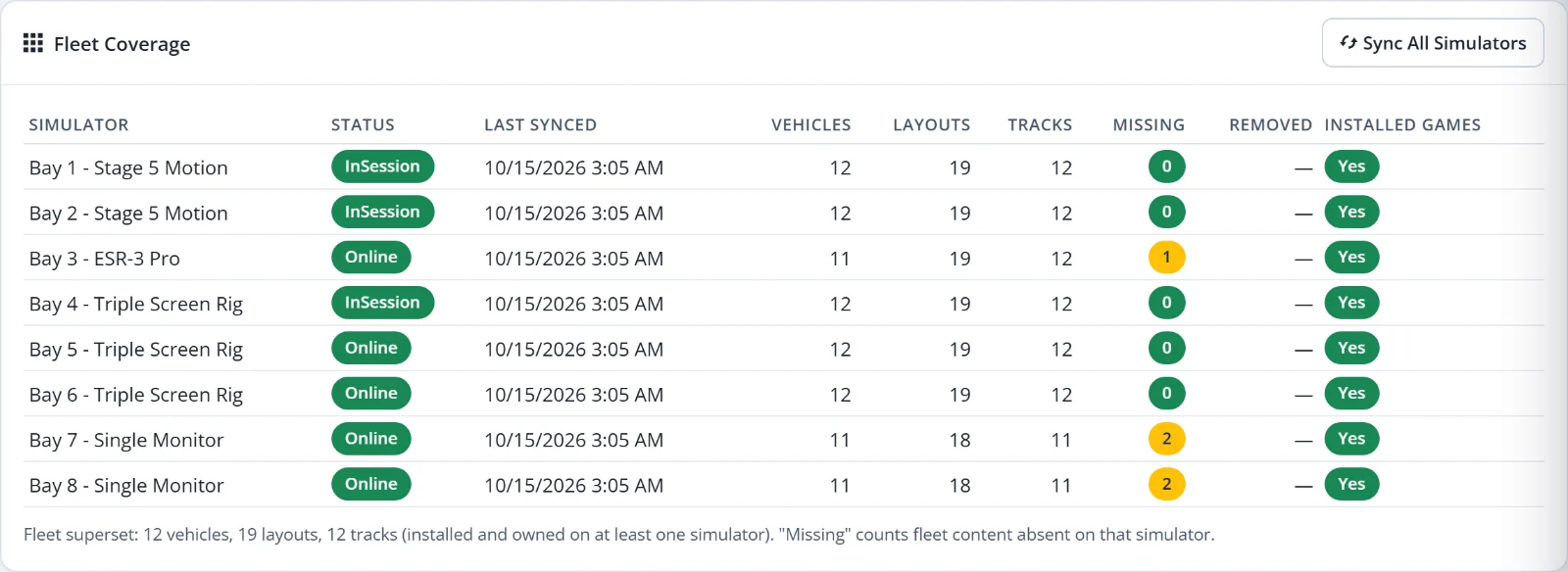
Here is what a self-serve kiosk does in VenueChief. The guest finds a booking by code, email or phone number, or starts as a walk-in. The waiver is signed on screen, and for a minor the kiosk asks for a guardian before it accepts it. The guest chooses a length, the rigs, the game, the track and the car, confirms and pays on a card reader attached to that kiosk. A game is offered only if it is installed on every rig the guest picked, so the failure happens before they pay and not on the grid. Then the rigs switch to loading and the screen says where to sit.
What that removes from the counter: the queue of walk-ins, the waiver chase, and taking payment for every session. What it does not remove: someone on the floor. A missing guardian, a game the chosen rigs cannot run and a card that declines still need a person, and so does anyone driving a motion rig. Do not plan to run racing with nobody on site.
Many sim racing lounges are half bar. The rigs bring people in, and the drinks and snacks pay the rent on the busy nights. That changes three decisions: the floor plan, the staffing and the books.
The limits, so you can price them in: this is the bar and counter of a venue whose main business is the activity, not a restaurant system. There is no receipt or kitchen printing, no cash drawer, no recipe or ingredient costing and no food purchasing today. QR ordering at the table and happy hour pricing are not available at the register. Food and beverage is an add-on to the Platform plan at $259 a month, tables included. A twelve-rig lounge with a kitchen or bar is $1,270 a month, against $1,011 without it.
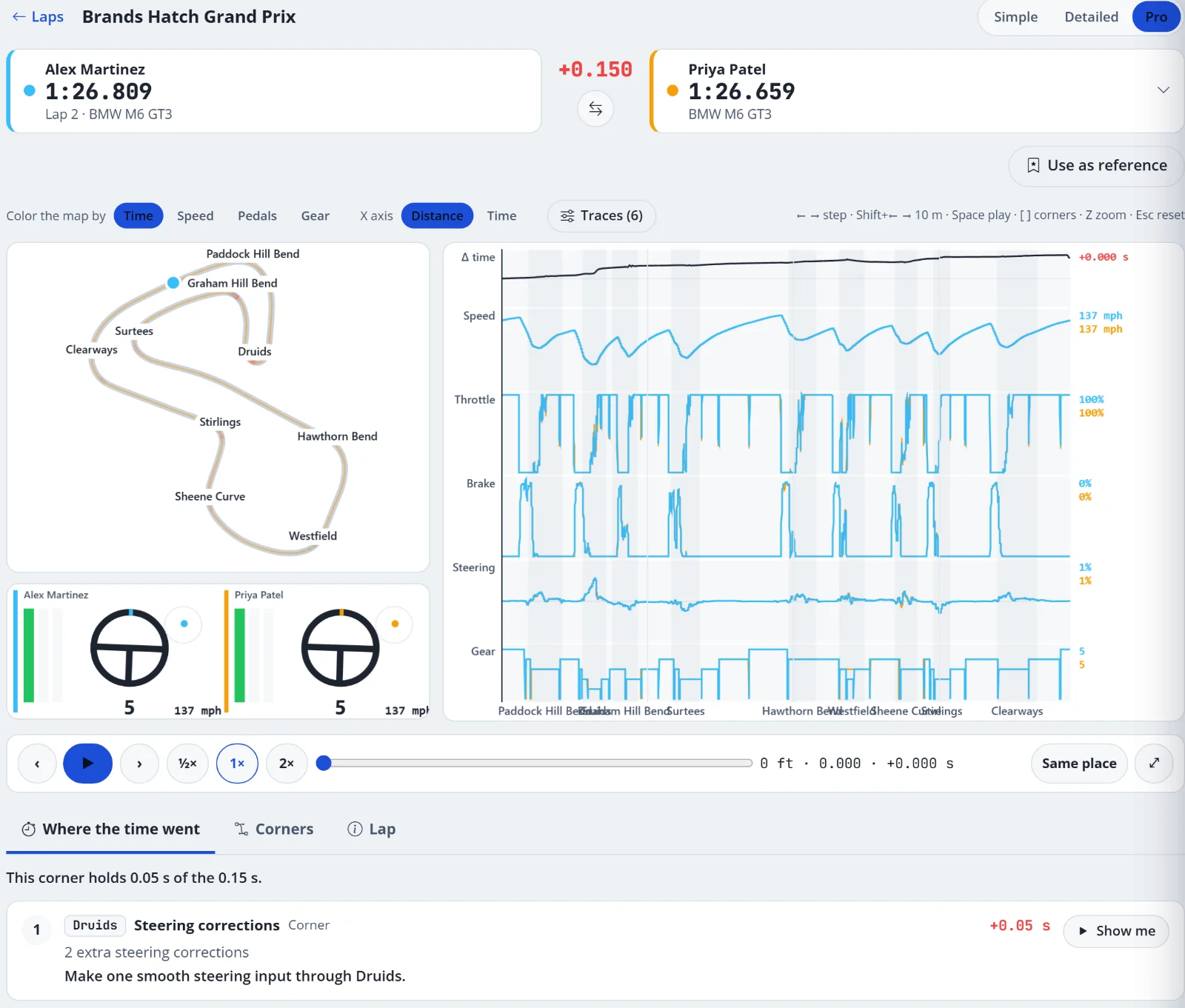
Many first-time guests never come back. The venues that grow give them a reason to: a lap time on a leaderboard, a driver score that improves as they do, a league table, a lap analyzer that shows exactly where they lost two tenths at the hairpin. All of that only works if every lap is recorded against the guest’s name, which is a decision you make at setup, not later.
A merchant account goes through underwriting, and a new business with no trading history gets extra questions. Apply as soon as the business exists.
Public liability at the very least. Ask your broker about motion simulators and about minors driving.
Have a lawyer in your state review it, including who may sign for a minor.
Confirm both with your landlord and the local authority before anyone starts building.
Some venues do, and some close. The ones we see doing well sell group races, parties and corporate events rather than relying on walk-ins, and give regulars a reason to come back. Be wary of any guide, including this one, that promises a profit figure without knowing your rent and your town.
Enough for a group race in the format you want to sell. For most venues that is six to twelve.
The ones your guests have heard of and that your software can control from one screen. VenueChief launches and manages rFactor 2 and Le Mans Ultimate sessions across many rigs, and supports Assetto Corsa with a narrower set of controls.
For racing, yes. Software can remove the queue at the counter and let one person run a group, but someone has to be on the floor while guests are driving.
Booking, waivers and payment work the same way. The difference is setup time, transport and insurance, so price events by the day.
Six months before you open, when you are making the decisions in this guide. We will walk through them with your floor plan whether or not you buy anything.
Send us your layout and your opening date, even if it is a year away. We will set your rigs up in VenueChief to match and go through these decisions with your own numbers.
Written by Bernard Villers Jr. VenueChief and SimXperience share ownership; this guide does not recommend a rig brand. Updated October 2026.
The sim racing pieces, one capability at a time.
Depth on the decisions above.